
Design for recycling: how beverage cartons can become better PolyAl feedstock
Carton design choices upstream — barriers, inks, closures — directly determine how clean and useful the recovered PolyAl is downstream.
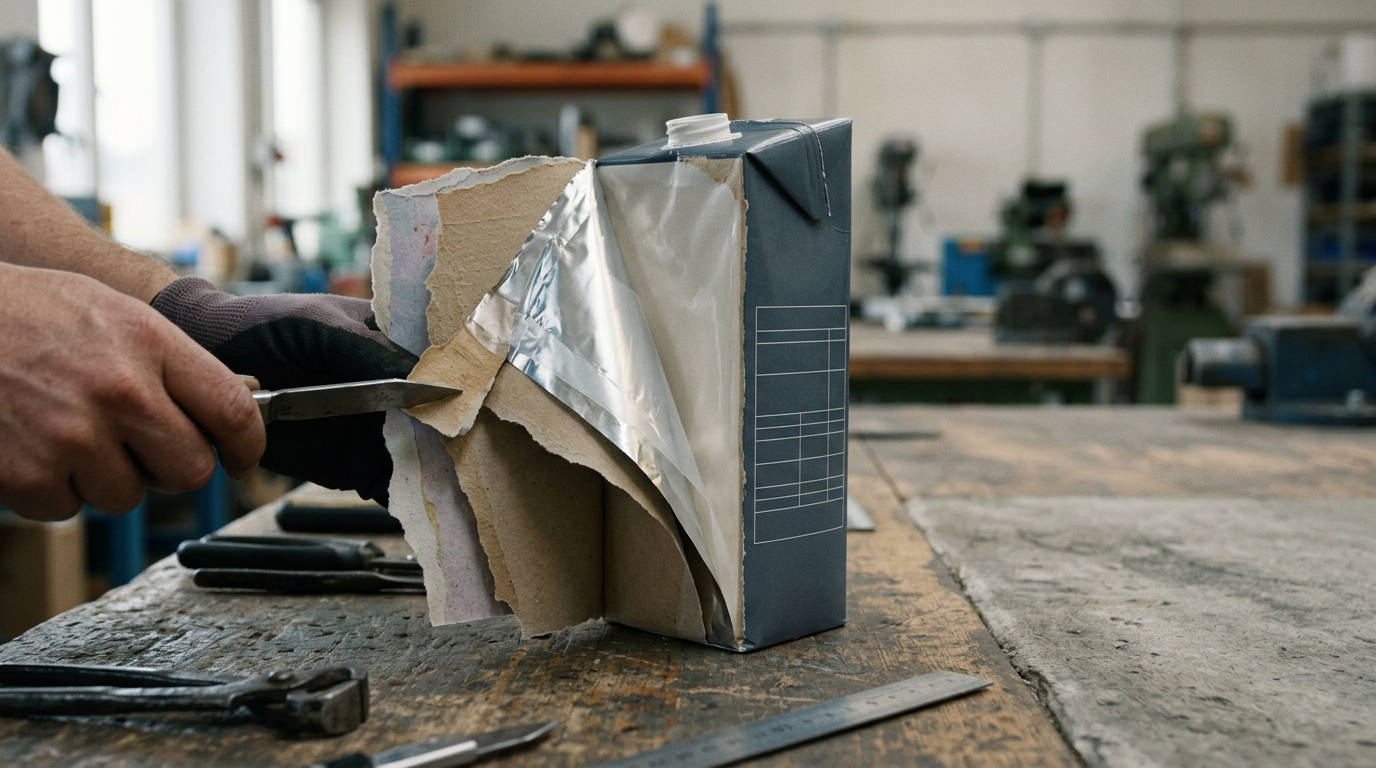
Most circular-economy debates focus on what happens to a package after it is used. But for beverage cartons, the most important sustainability decisions are made years earlier — in the brand's packaging design office. Decisions about barriers, inks, closures and aluminium content directly determine how clean and useful the resulting PolyAl is.
The four design levers
1. Aluminium foil thickness
Classic aseptic cartons use 5–6 µm aluminium foil for oxygen and light barrier. Newer "low-aluminium" or "aluminium-free" cartons (aluminium-free carton grades) use polymer barriers (EVOH, SiOx) instead. From a PolyAl-recycler perspective:
- Standard cartons → PolyAl pellet with 10–13 % ash content (this is fine and well-characterised)
- Aluminium-free cartons → PolyE pellet (no aluminium, lower density, easier to compound)
Both are recyclable; both produce useful pellets. The aluminium-free route is closer to virgin HDPE in behaviour.
2. Polyethylene grade
LDPE inner-seal layer + LDPE outer-coating layer. Brand owners that switch to "bio-based" PE (sugarcane ethanol-derived, chemically identical to fossil PE) feed the same recycling stream — no negative impact on recyclability.
3. Closures
- HDPE screw caps (most common) → typically removed manually before recycling at the consumer end (where deposit return systems require it) or separated mechanically
- Tethered caps (EU SUP Directive 2024) → improvement for litter; neutral for recyclability
- Different-polymer caps (PP) can contaminate the PolyAl stream if not separated
4. Inks and varnishes
- Water-based inks → no impact on recycler
- Solvent-based inks → trace VOC residues end up in the wash water; recyclers prefer water-based
- Mineral oil-based varnishes → small amounts in the PolyAl pellet; below regulatory thresholds for non-food applications
What brand owners can do today
- Specify water-based inks
- Avoid contrasting multi-polymer closures (use HDPE caps even if a PP cap looks nicer)
- Print the recycling instruction directly on the carton (proven to lift collection rates by 5–8 %)
- Engage with their carton supplier on aluminium-free options where the product allows (oxygen-tolerant beverages)
What recyclers can do
- Provide free per-batch feedback to brand owners on how their cartons performed in the recycling process
- Publish design-for-recycling guidance (CEPI, ACE and CITEO have published versions in 2024)
Bottom line
The quality of recycled PolyAl is mostly determined upstream. Brand owners who treat their carton design as a recyclability decision get cleaner pellets, better ESG narratives and lower regulatory exposure. The recycler can only work with what is fed to it.