
PolyAl Pellets
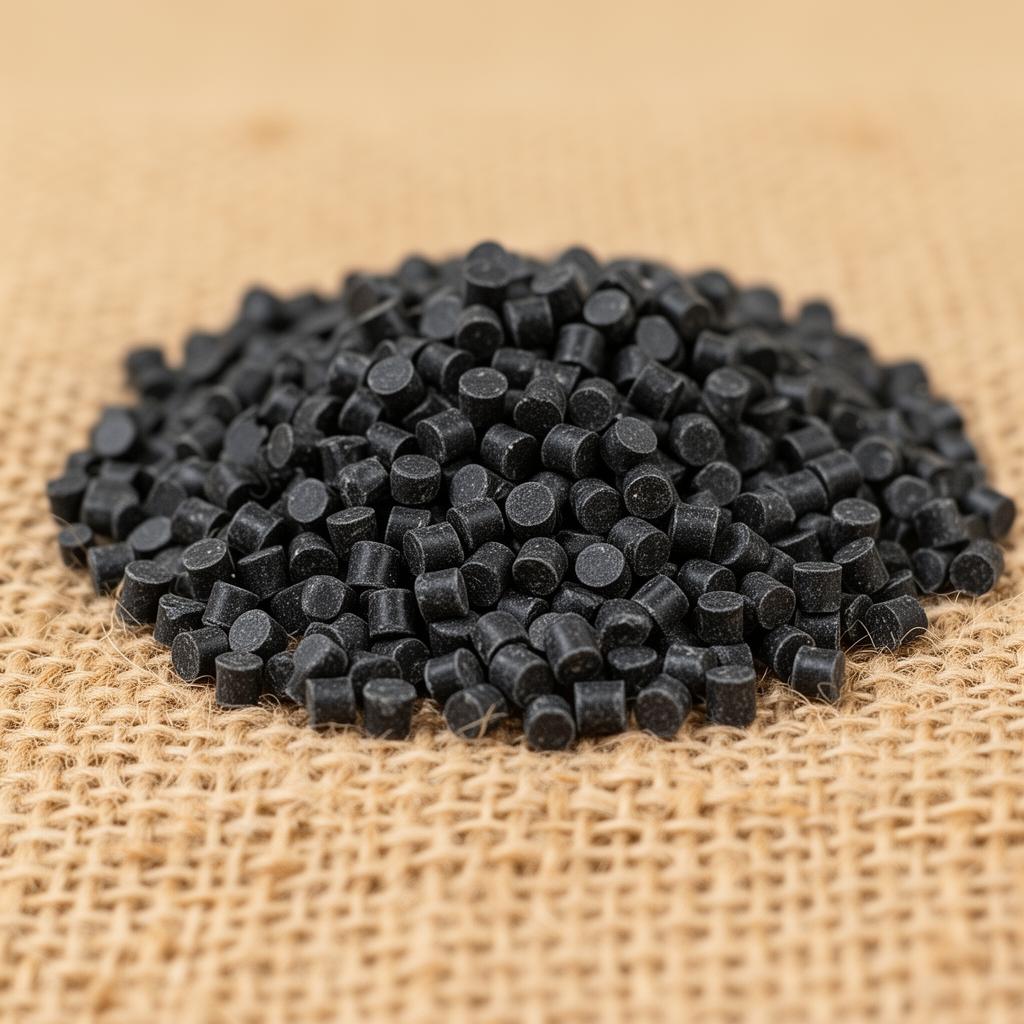
A homogeneous recycled polyolefin pellet dominated by LDPE (≈66% LDPE, 18% HDPE, 6% PP) with ≈10% aluminium recovered from post-consumer packaging. Blends into most injection and extrusion processes.
Want the full background? Read the complete PolyAl reference.
Available formats
The same ISCC PLUS certified PolyAl material, supplied in three formats so it fits your process exactly.
Standard pellet
For PE/PP extrusion and injection moulding: the base material, produced following UNE 53925:2026. ISCC PLUS certified.
Micronised
Powder below 500 microns for rotomoulding and bitumen modification; particle size documented batch by batch.
Formulated compounds
GP Compound P23 (stiffness/impact) and GP Compound P20-Flex (toughness): ready-to-inject pellets, formulated and homogenised, with an ISO technical datasheet and a Certificate of Analysis per batch.
Blending it yourself? Download our technical guide for consistent results. Blending guide (TN-01)
Technical specifications
Reference: UNE 53925:2026
| Property | Standard | Value |
|---|---|---|
| Melt flow index | UNE-EN ISO 1133-1:2012 | 2 – 4 g/10min |
| Density | UNE-EN ISO 1183-1:2019 | 950 – 1050 kg/m³ |
| Humidity | In-house method | < 0.15 % |
| Ash content | UNE-EN ISO 3451:2020 | < 13 % |
| Tensile strength | UNE-EN ISO 527-2:2012 | 10 – 15 MPa |
| Vicat temperature | UNE-EN ISO 306:2013 | 90 – 100 °C |
| Flexural modulus | UNE EN ISO 178:2020 | 220 – 520 MPa |
Laboratory tests
Independent third-party laboratory results on extruded PolyAl profiles.
| Test | Standard | Result | Status |
|---|---|---|---|
| Resistance to cleaning chemicals (bleach, detergents, floor cleaners) | UNE 56875:2021 | Intensive-use rating | Pass |
| Maximum profile torsion | UNE-EN 14195:2015 | 0.040 (limit ≤ 0.1) | Pass |
| Melt flow index | UNE-EN ISO 1133-1:2012 | 2 – 4 g/10min | Compliant |
| Density | UNE-EN ISO 1183-1:2019 | 950 – 1050 kg/m³ | Compliant |
| Tensile strength | UNE-EN ISO 527-2:2012 | 10 – 15 MPa | Compliant |
| Vicat temperature | UNE-EN ISO 306:2013 | 90 – 100 °C | Compliant |
| Flexural modulus | UNE EN ISO 178:2020 | 220 – 520 MPa | Compliant |
Logistics & packaging
- Homogeneous batch: 60 t
- Big Bag up to 1000 kg
- Palletised for road and sea freight
- Worldwide shipping — we deliver to any country
- EUR.1 movement certificate on request — preferential EU origin, reduced or zero import duty
Independently tested
Profiles extruded from PolyAl have passed independent laboratory testing for resistance to cleaning chemicals (UNE 56875:2021 — intensive-use rating) and maximum profile torsion (UNE-EN 14195:2015 — 0.040 ≤ 0.1 limit). All material produced since 29 September 2026 is ISCC PLUS certified.
Request a quoteAlso available before pelletising
The same PolyAl material is available at two earlier stages of the line, sold in full batches by request.
Unwashed PolyAl
The separated non-fibre fraction of post-consumer multilayer packaging, shredded into flakes and sold as it leaves the process — before washing, drying or pelletising.
Washed PolyAl
The same polyethylene-aluminium material after washing and drying: clean, homogeneous flakes ready for compounding or for extrusion with process adjustment.
Frequently asked questions
Does the material come with an EUR.1 certificate?
+
Yes. PolyAl is produced in the EU and every shipment can be issued with an EUR.1 movement certificate proving preferential EU origin, so buyers in countries with an EU trade agreement can claim reduced or zero import duty. Standard export documentation (invoice, packing list, CMR/bill of lading, UNE 53925:2026 certificate of analysis and MSDS) is included.
What is PolyAl made of?
+
PolyAl is a 100% post-consumer recycled pellet made from polylaminated beverage cartons and produced following UNE 53925:2026. It combines a polyethylene matrix with ≈10% aluminium reinforcement. All material produced since 29 September 2026 is ISCC PLUS certified.
Can PolyAl be used instead of virgin HDPE?
+
Not as a one-for-one substitute. PolyAl always goes into the blend with the resin you already run, on your existing PE/PP injection and extrusion lines and with no equipment change — pallets, profiles, urban furniture and crates. Its density (950–1050 kg/m³) and Vicat point (90–100 °C) are comparable to standard HDPE grades, and you set the share for your part.
What processes is PolyAl compatible with?
+
Injection moulding, extrusion and profile manufacturing. Recommended melt temperature 180–220 °C. MFI 2–4 g/10min (190 °C / 2.16 kg).
Is it food-grade?
+
PolyAl is intended for industrial and non-food contact applications: pallets, crates, profiles, urban furniture, fencing and non-structural construction.
Has it been independently tested?
+
Yes. Independent laboratory tests by Tecnalia confirm intensive-use chemical resistance (UNE 56875:2021) and torsion 0.040 (limit ≤ 0.1) per UNE-EN 14195:2015.
What is the minimum order and packaging?
+
Standard supply is in homogeneous 60-tonne batches, palletised in big bags up to 1000 kg, ready for road and sea freight.
How does it help my Scope 3 reporting?
+
Each tonne of PolyAl diverts ~1 tonne of polylaminated waste from landfill or incineration and avoids the embodied emissions of virgin HDPE — typically a meaningful Scope 3 category 1 reduction.