
From waste to value: inside the PolyAl recycling process
How a polylaminated reject becomes a homogeneous, spec-grade pellet ready for industrial moulding.
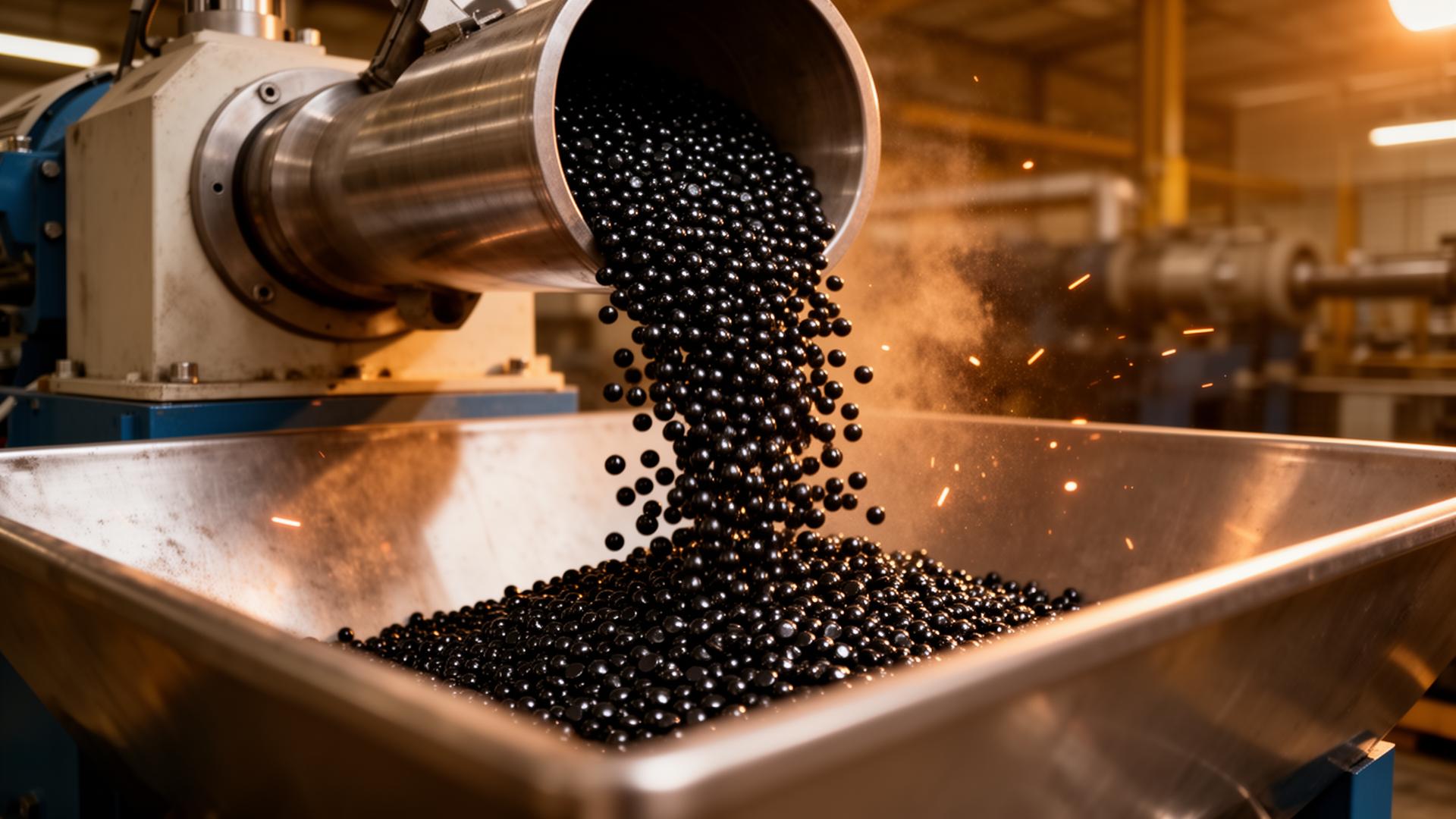
Most people who hear "recycled plastic" picture a chaotic stream of mixed materials with unpredictable behaviour in moulding. The reality of ISCC PLUS certified PolyAl is the opposite — and the difference is process.
Step 1: source segregation
The journey starts before our facility, at the carton recyclers. After the cardboard fibre is pulped out for paper mills, what remains is a clean, identifiable stream of polyethylene with embedded aluminium. That single-source feedstock is what makes the rest of the process work.
Step 2: shredding and washing
The PolyAl reject arrives in bales. We shred it, wash it to remove organic residues from the original beverage contents, and dry it to below 0.15% humidity. Moisture is the enemy of consistent extrusion.
Step 3: extrusion and pelletising
The clean material is fed into a twin-screw extruder. Heat and shear melt the polyethylene around the aluminium particles. The melt is filtered to remove any oversized inclusions, then forced through a die plate and chopped into pellets — typically 3–4 mm cubes with a slight aluminium sheen visible under bright light.
Step 4: batching and documentation
Every 10-tonne batch is sampled for melt flow index, density, ash content and tensile strength. The numbers go on the technical sheet that ships with the Big Bag. UNE 53925:2026 sets the framework for what counts as a compliant batch.
Why this matters for moulders
Two things make this approach different from generic post-consumer pellets:
- Predictability. A pallet maker setting injection parameters wants the next batch to behave like the last one. Single-source feedstock plus full per-batch testing gets us there.
- Functional aluminium. Up to 13% mineral filler that acts as a natural stiffener. You buy a single material that already has the rigidity profile some moulders try to mimic with talc-filled compounds.
The process is industrial, traceable, and unglamorous. That is exactly why it works.