
The hidden cost of beverage cartons — and how industry can fix it
950,000 tonnes of cartons consumed yearly in Europe. Only a third gets recycled. The rest is an industrial opportunity.
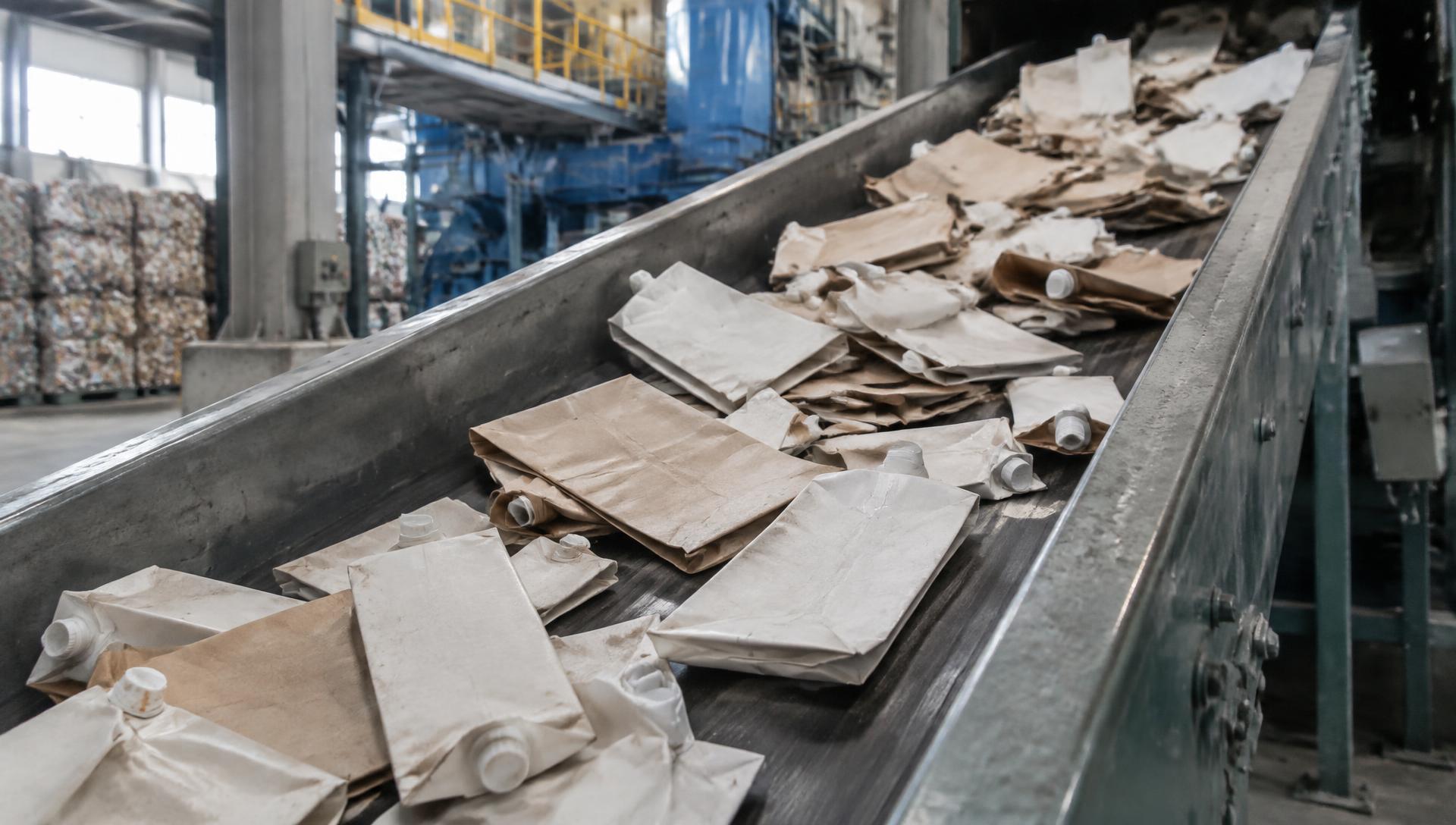
A beverage carton is a small marvel of engineering. Roughly 75% cardboard, 20% polyethylene, 5% aluminium — three layers that keep milk shelf-stable for months. The same engineering is also why most cartons end up in landfill.
The numbers
Europe consumes about 950,000 tonnes of beverage cartons every year. Effective recycling rates hover around 35%. That leaves roughly 720,000 tonnes annually — the equivalent of 65 Eiffel Towers — heading to landfill or incineration. Each one needs around 500 years to biodegrade.
Why traditional recycling stops at the fibre
Carton recyclers focus on what is easiest: pulp the cardboard, sell it back to paper mills. The remaining 25% — the PolyAl fraction of polyethylene and aluminium — has historically been an awkward by-product. Burnt for energy, mostly. Sometimes landfilled.
That fraction is exactly the input for our pellets.
What changes when industry buys the residue
When a plastic pallet maker, a profile extruder or an urban furniture brand commits to recycled PolyAl, three things happen at once:
- 1The recycler has a paying customer for the residue, which makes the whole carton recycling chain more economically viable.
- 2Virgin polyethylene demand drops by an equivalent volume.
- 3The industrial buyer scores a measurable Scope 3 reduction.
The cost of beverage cartons is hidden because the externalities are invisible on a balance sheet. Buying their recycled pellets is one of the cleanest ways to make those externalities show up on the right side of yours.