
Recycled materials·7 min read·
Colouring PolyAl: masterbatch dosing, pigments and the speckle question
Why charcoal is the easy default and how to push PolyAl into greens, reds, terracotta and even pastels.
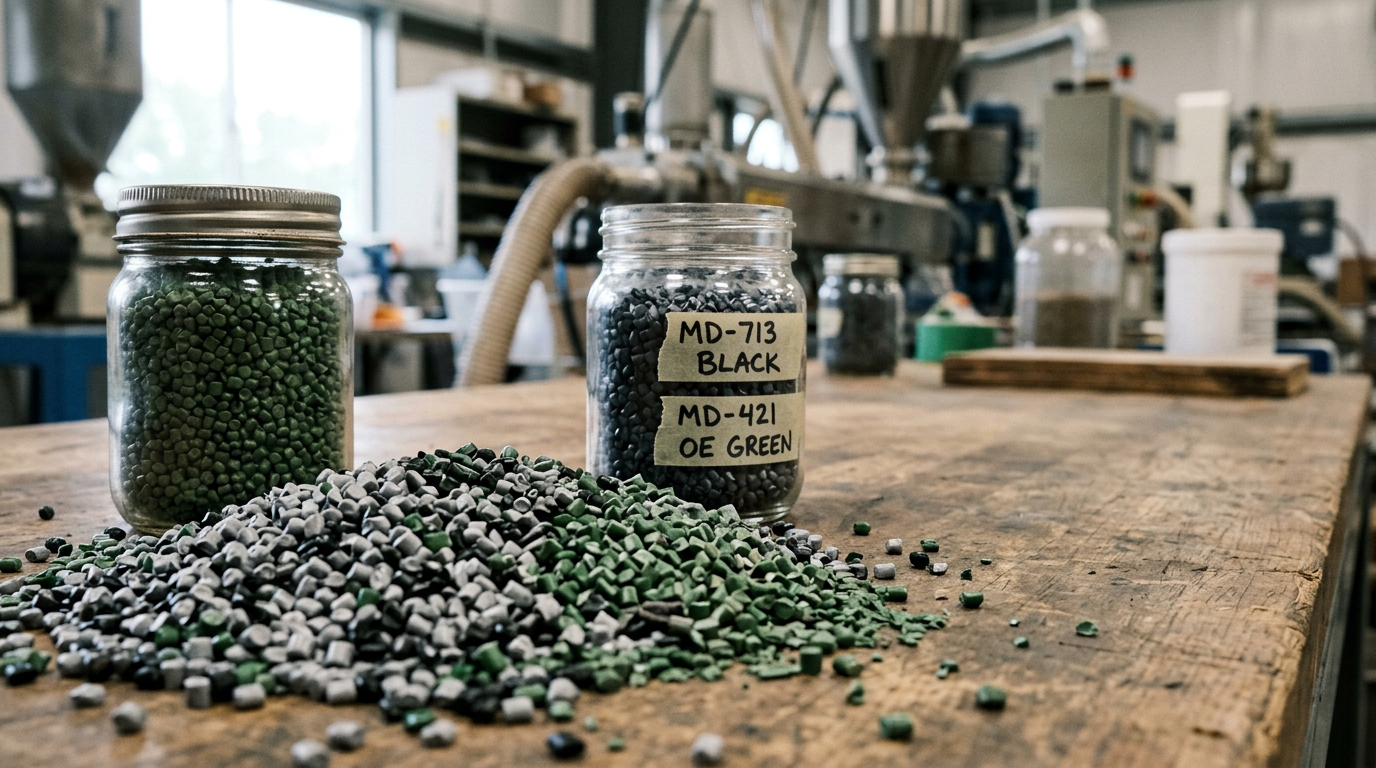
Native PolyAl is a charcoal grey with metallic flecks. It is a beautiful, honest "recycled" finish — but specifications often demand other colours. This article covers what is possible, at what cost.
The base colour
PolyAl varies in shade slightly batch to batch (anthracite to dark grey). The variation is much smaller than people fear: ΔE between batches is typically < 3.
Easy colours: black, charcoal, dark grey
- 1–2 % black masterbatch (CN 2–3 %) gives a uniform deep black
- No masterbatch gives the native charcoal — increasingly the most demanded finish for circular-economy branding
Mid-difficulty: forest green, terracotta, navy, olive, brown, brick red
- 4–6 % colour masterbatch
- Pigments: iron oxides, phthalocyanine, ultramarine, chromium oxide
- Aluminium specks remain visible — designers describe the look as "stone-like" or "terrazzo"
Hard colours: white, pastel, bright yellow, bright red
- 6–8 % loading required
- Even then, light tones reveal aluminium specks more, not less
- Suitable for parts where the speckled look is acceptable as a feature
- For perfectly uniform pastel surfaces, co-extrude or co-inject a thin virgin-HDPE cap layer (0.3–0.8 mm)
What we recommend
For almost all outdoor and industrial applications, embrace the speckle. Charcoal grey, deep green, oxide red, slate blue and earthy brown look great in the speckled finish and reinforce the recycled-content message that ESG-conscious end users want to see.