
Total cost of ownership: PolyAl pallets vs wood and virgin plastic
Acquisition price is just the start. Lifetime costs of pooling, repair, hygiene and end-of-life shift the equation toward PolyAl.
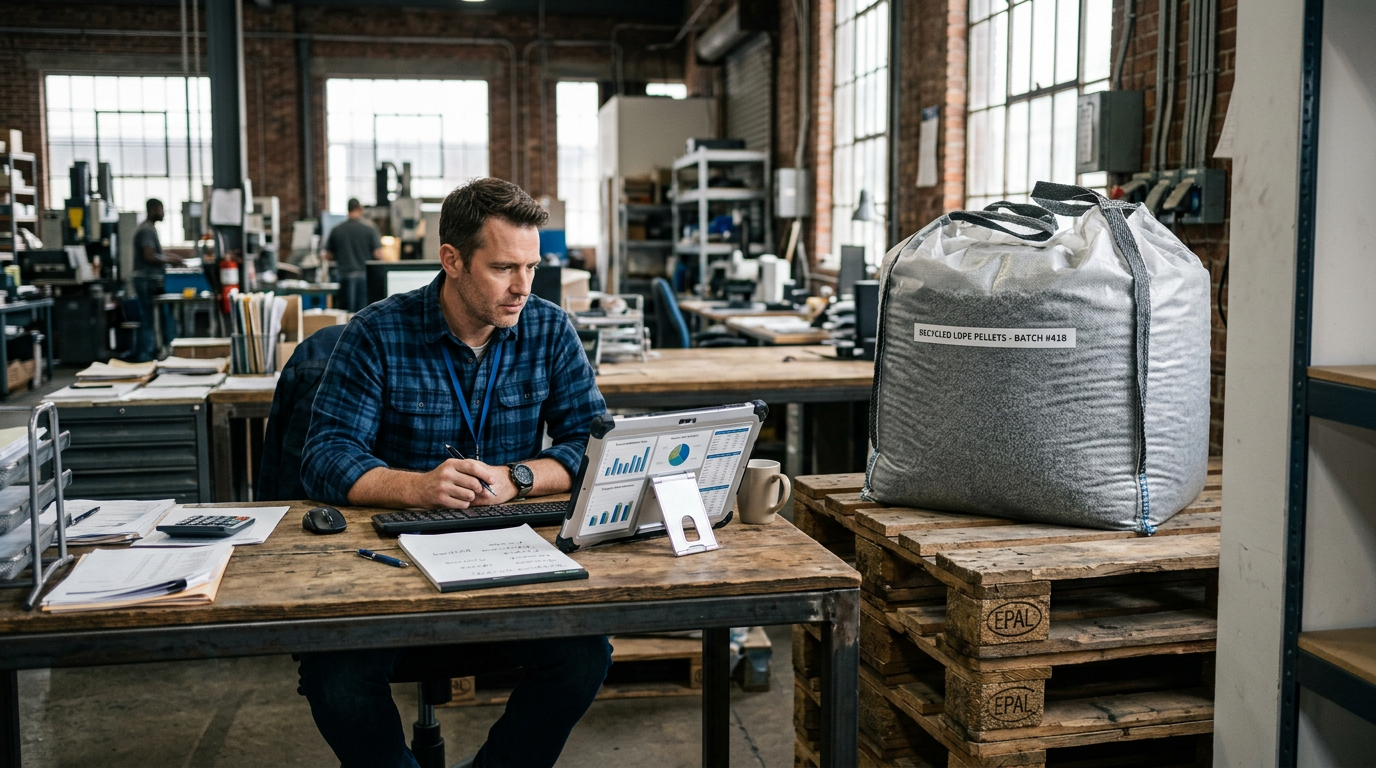
Procurement teams that compare pallet options on price-per-unit miss most of the value equation. This article walks through a 5-year total cost of ownership (TCO) for three common options: heat-treated wood (EPAL), virgin HDPE plastic, and PolyAl.
Acquisition price (Europe, 2026)
- EPAL Euro pallet (wood, ISPM-15): €12–16
- Virgin HDPE Euro pallet (~22 kg): €60–85
- PolyAl Euro pallet (~25 kg): €45–65
Wood is cheapest at acquisition. PolyAl is 25–30 % cheaper than virgin HDPE.
Lifecycle assumptions
- 50 cycles/year for closed-loop pooling
- Mean rotation 7 days
- Repair triggered by fork-lift damage, splinters, fastener pull-out
Mean service life
- Wood: 18–24 months (with repairs every 3–6 cycles)
- Virgin HDPE: 8–10 years
- PolyAl: 8–10 years (comparable to virgin HDPE)
Repair costs (per cycle)
- Wood: €1.20–2.00 (fasteners, deck boards, splinter removal)
- Plastic (virgin or PolyAl): negligible — replace at end of life
Hygiene costs
Wood absorbs water and contamination; routine sanitisation is impossible. Plastic pallets withstand pressure washing and chemical cleaning (UNE 56875:2021 for PolyAl). For pharma, food-handling and clean rooms this is decisive.
End of life
- Wood: chipping or low-value energy recovery
- Virgin HDPE: full recyclability into new plastic pallets
- PolyAl: full recyclability into new PolyAl pellets
5-year TCO per pallet (250 cycles)
| Item | Wood | Virgin HDPE | PolyAl |
|---|---|---|---|
| Acquisition (amortised) | €30 (replaced 2.5×) | €72 | €55 |
| Repairs | €375 | €5 | €5 |
| Hygiene cleaning | n/a | included | included |
| End-of-life value | €0 | +€8 | +€8 |
| 5-year TCO | ~€405 | ~€69 | ~€52 |
Carbon TCO
- Wood: variable, ~+0.5 t CO₂e per pallet over 5 years (manufacturing, repairs, replacement)
- Virgin HDPE: ~+0.05 t CO₂e per pallet (long life, but virgin polymer)
- PolyAl: ~+0.02 t CO₂e per pallet (long life + recycled feedstock)
Bottom line
Wood looks cheap on day 1 and expensive across 5 years. Virgin HDPE is durable but high-carbon. PolyAl matches virgin HDPE on durability, beats it on price, and undercuts both on carbon. For closed-loop logistics, PolyAl is the lowest TCO option in 2026.