
Case studies·7 min read·
Recycled PolyAl in viticulture: posts, trellis crossarms and clip systems
Why French and Spanish wineries are replacing creosote-treated wood and steel posts with PolyAl extruded profiles.
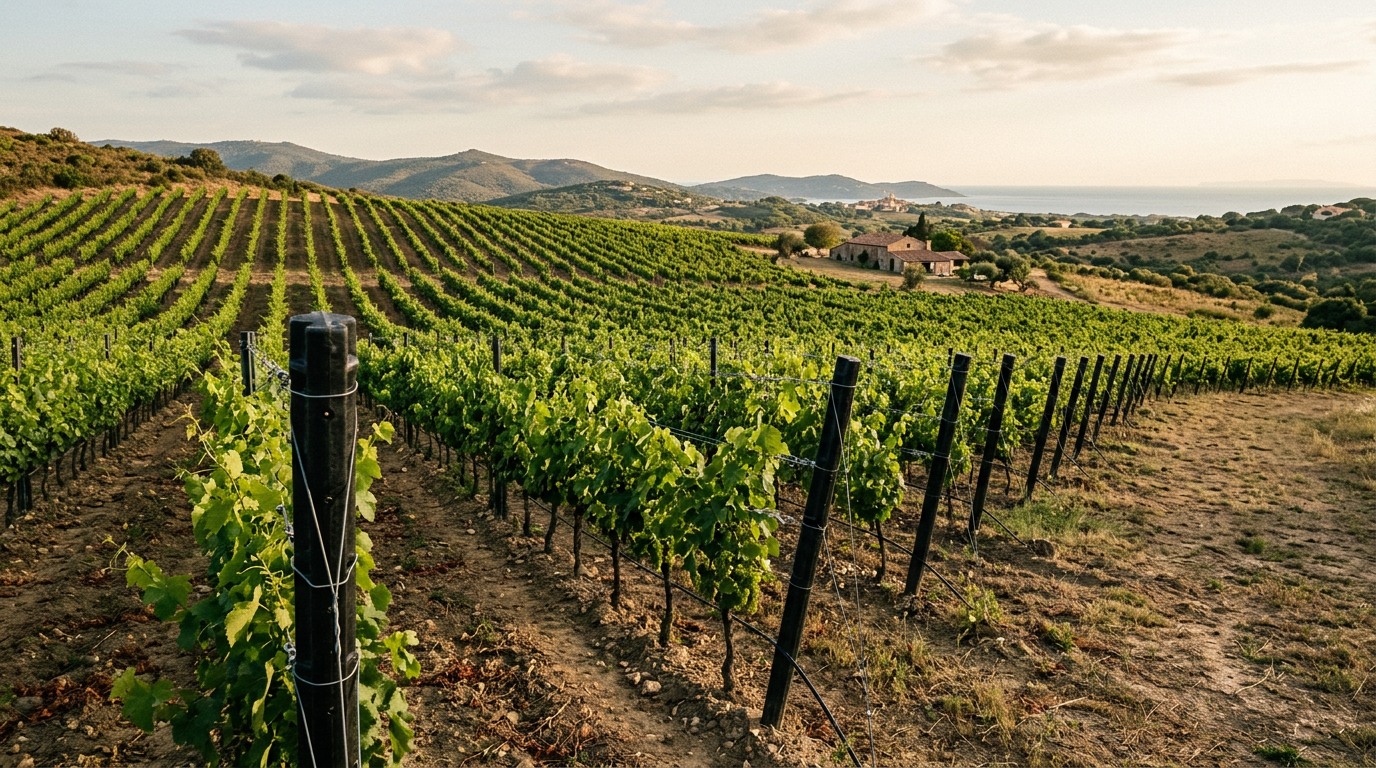
Vineyards consume tens of millions of trellis posts each year across Europe. Traditional options — creosote-treated pine, galvanised steel, concrete — all have drawbacks. PolyAl extruded posts are an emerging alternative gaining ground in Bordeaux, Rioja, La Mancha, Languedoc and Veneto.
Why move away from wood and steel
- Creosote regulation: EU Biocidal Products Regulation (528/2012) restricts creosote use; many member states have phased out vineyard applications
- Steel corrosion: galvanised steel posts in vineyards corrode at the soil line within 15 years
- Concrete weight and breakage: heavy to install, brittle under tractor impact, no recycling stream
PolyAl post specifications
Typical extruded vineyard post:
- Section: hollow rectangular 60×40 mm or T-shape
- Length: 2.0–2.5 m (above ground 1.6 m)
- Wall thickness: 6 mm
- Mass: 3.5–4.5 kg/post
- Colour: native charcoal or oxide brown
- Surface: extrusion texture, slight grip for wires
Field performance
- Pull-out resistance after installation: > 1.5 kN (typical wine wire tension is < 0.6 kN)
- UV ageing tested to 15 years equivalent: > 75 % property retention
- Tractor impact: deforms elastically, returns to shape; no shattering like concrete
- Fungal/insect resistance: total (no organic substrate)
Installation
- Hammered with standard hydraulic post drivers
- No pre-drilling required in most soils
- Wire clips and notches can be moulded directly into the profile
- Re-usable: posts removed from a replanted vineyard can be reinstalled in another
Cost
- PolyAl post (60×40, 2.5 m): €3.50–5.00
- Creosote pine equivalent: €3.00–4.50 (but environmental and regulatory liability)
- Galvanised steel equivalent: €5.00–8.00
- Concrete equivalent: €4.00–6.00 + freight cost
End of life
100 % recyclable into new PolyAl pellets. Take-back schemes operated by some Spanish suppliers.
For wine estates with sustainability commitments and a horizon of 25–30 years per planting cycle, PolyAl is increasingly the rational choice.