
PolyAl, aluLDPE and engineered HDPE compounds: which one fits your part?
Three families of polyethylene-aluminium materials are on the European market today. They look similar on a datasheet but solve different engineering problems.
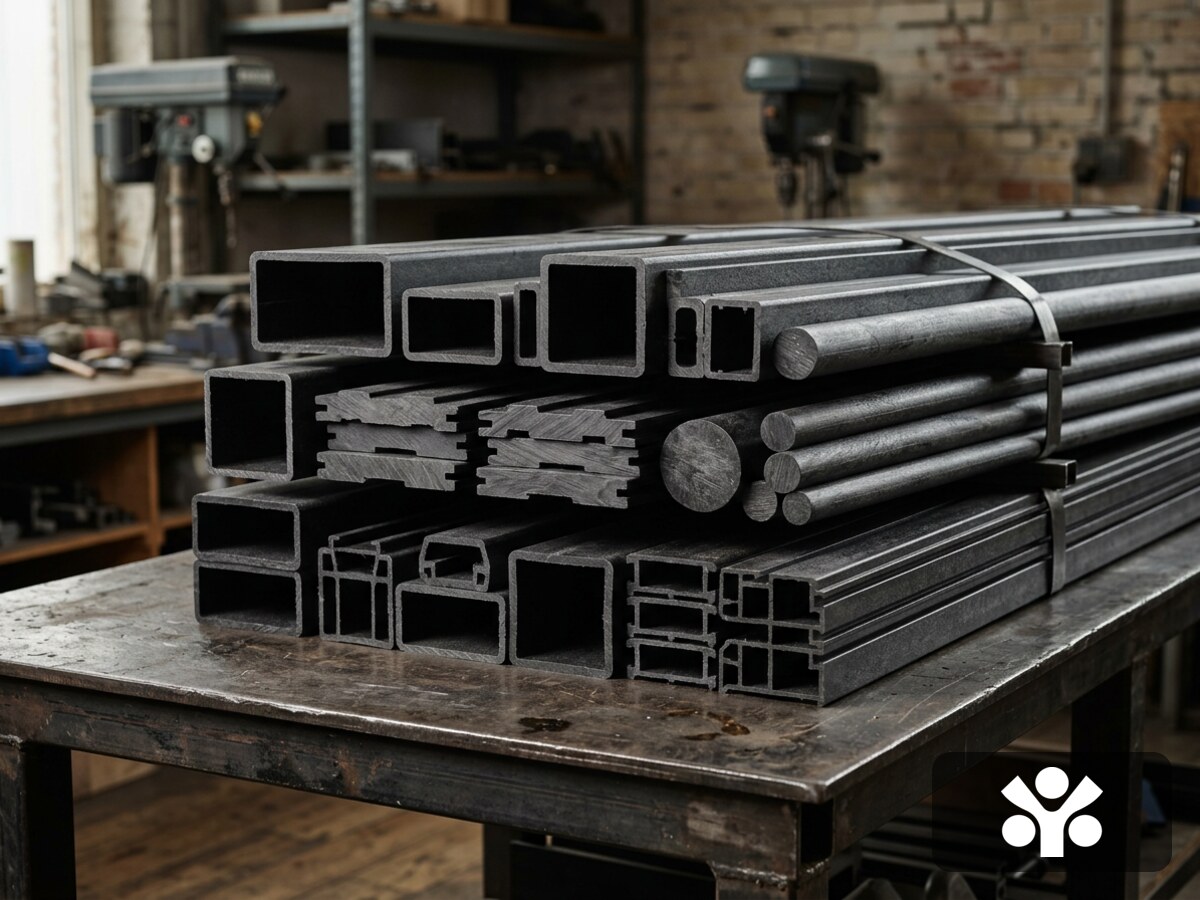
Walk into any European industrial moulding shop in 2026 and you will hear three different terms used for materials that, on the surface, sound interchangeable: PolyAl pellets, aluLDPE regranulate, and engineered HDPE-aluminium compounds. They are not interchangeable. This article explains the differences in plain engineering terms.
What they have in common
All three contain polyethylene as the matrix and metallic aluminium as a stiffening filler. All three are recovered, in some form, from used beverage cartons. All three replace virgin HDPE in industrial moulding applications.
The differences are in base polymer grade, aluminium loading, processing route and intended end use.
1. ISCC PLUS Certified PolyAl pellets (e.g. GetPolyal)
Composition. A high-density polyethylene matrix recovered from beverage cartons, with up to 13% aluminium retained as a mineral filler. Typical specs: density 950–1050 kg/m³, MFI 2–4 g/10min, Vicat 90–100 °C, tensile 10–15 MPa.
Processing route. Source-segregated PolyAl reject → wash → dry → twin-screw extrusion → pellets produced following UNE 53925:2026.
Best for. Pallets, profiles, urban furniture, crates and bins. Anywhere a virgin HDPE part is currently used and the buyer needs full per-batch traceability for PPWR or Scope 3 reporting.
Distinguishing features. Compliance with the only European national standard dedicated to PolyAl, plus independent third-party validation by Tecnalia (UNE 56875:2021 chemical resistance, UNE-EN 14195:2015 torsion).
2. aluLDPE regranulate (e.g. Plastigram)
Composition. A low-density polyethylene matrix with aluminium load, recovered from PolyAl reject. Typically softer and more flexible than HDPE-based PolyAl.
Processing route. Mechanical processing of PolyAl reject into a regranulate marketed for injection moulding and technical applications.
Best for. Injection-moulded technical parts where the LDPE-style flexibility is welcome — film-adjacent applications, flexible packaging components, certain consumer goods. Less common in heavy structural pallets.
3. Engineered HDPE-aluminium compounds
Composition. A virgin or mixed-recycled HDPE blended with mineral aluminium powder or aluminium-bearing fillers, formulated by a compounder for a specific application.
Processing route. Conventional compounding line: virgin HDPE + filler + additives → twin-screw extrusion → pellet.
Best for. Applications with very tight, custom mechanical specs that require fine control over filler particle size, aspect ratio and additive package. Higher cost than recycled PolyAl. Often used where a customer wants the aluminium-stiffened mechanical profile but cannot accept post-consumer feedstock for regulatory or quality reasons.
How to choose
Three questions narrow it down quickly:
- 1Do you need post-consumer recycled content for PPWR / Scope 3? Yes → ISCC PLUS certified PolyAl or aluLDPE. No → engineered compound is also an option.
- 2Is the part rigid (pallet, profile, crate) or flexible (film-like, soft enclosure)? Rigid → HDPE-based PolyAl. Flexible → aluLDPE regranulate.
- 3Do you need formal compliance with a published European technical standard? Yes → UNE 53925:2026 PolyAl pellets are currently the only option.
The pricing reality
In 2026 prices, ISCC PLUS certified PolyAl pellets typically sit below virgin HDPE per kg, while engineered HDPE-aluminium compounds sit above. aluLDPE regranulate sits in a similar band to PolyAl.
For most pallet, profile and crate applications, the right answer is ISCC PLUS certified PolyAl. For specialty technical parts, the engineered compound or aluLDPE may justify the price difference. The wrong answer is to assume all three are interchangeable on a datasheet — they are not.