
PolyAl vs PP vs PVC: choosing the right material for industrial profiles
A practical decision matrix for extruders weighing recycled feedstocks against established polymers.
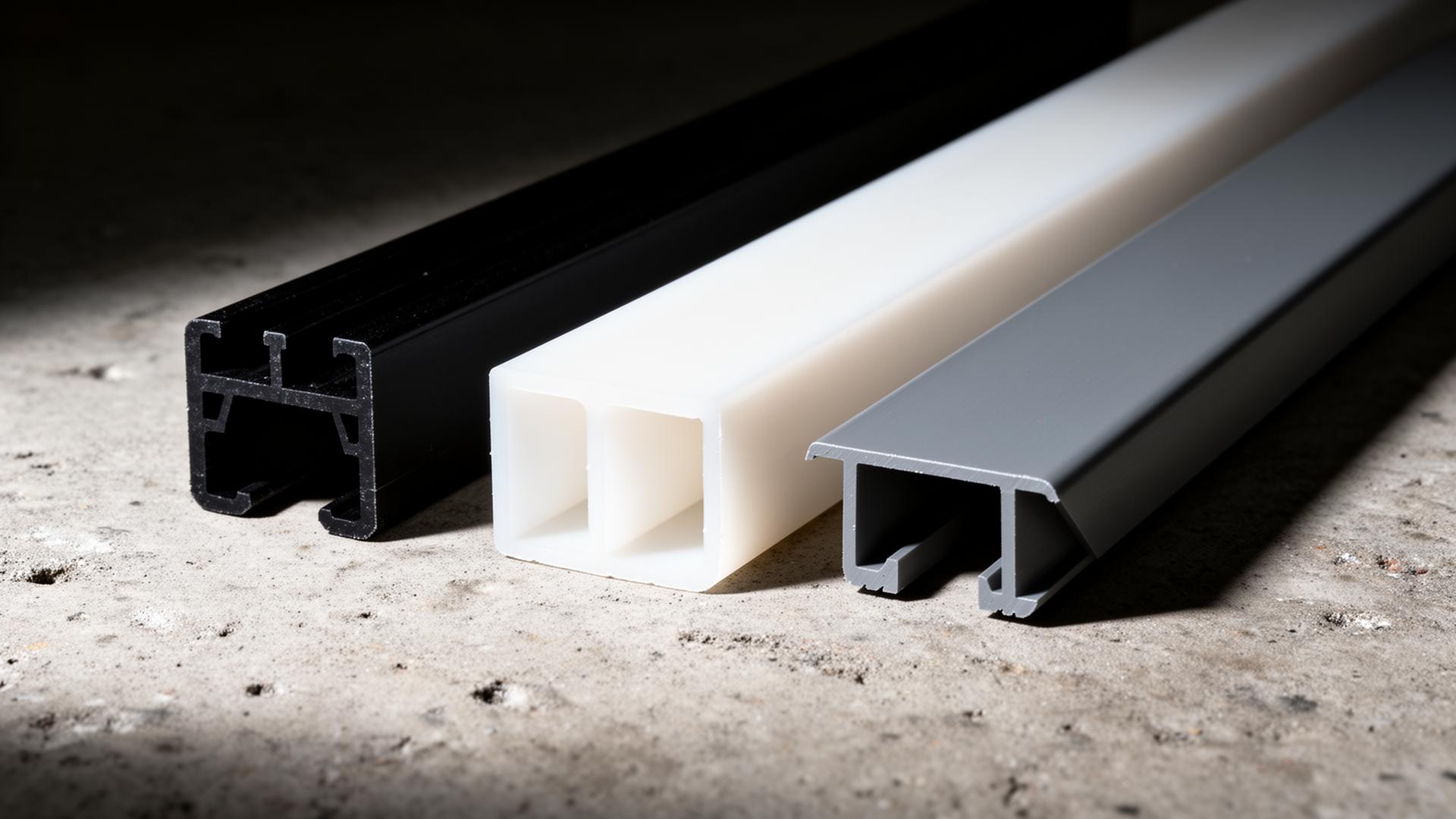
If you extrude profiles for fencing, urban furniture or load-bearing applications, you are probably running PP or PVC. Should you add PolyAl to the lineup? Here is the honest comparison.
Mechanical performance
PVC dominates on rigidity (E-modulus ~3000 MPa). PP sits in the middle (~1500 MPa). PolyAl with its 13% aluminium load lands around 1100–1300 MPa — close enough to PP for most profile geometries, especially when you have section depth to work with.
Weatherability
PVC has the best UV resistance untreated. PolyAl needs the same UV stabilisers PP needs to last outdoors a decade. Not a deal-breaker — every responsible profile maker already adds them.
Sustainability
This is where the picture flips. PVC carries chlorinated chemistry concerns (REACH scrutiny on plasticisers, lead stabilisers being phased out). Recycled PP is improving but supply is fragmented. PolyAl: 100% post-consumer, single traceable feedstock, lowest CO₂ per tonne of the three.
When PolyAl wins
- Outdoor furniture, decking, signage posts
- Fencing rails and gravel boards
- Cable trays in non-electrical applications
- Profiles where stiffness comes from section design, not modulus
When to stay with PVC or PP
- High-pressure piping
- Window frames where dimensional precision over decades is critical
- Food-contact applications