
Why recycled PolyAl beats virgin HDPE for industrial pallets
A direct comparison on cost, carbon and mechanical performance for plastic pallet manufacturers.
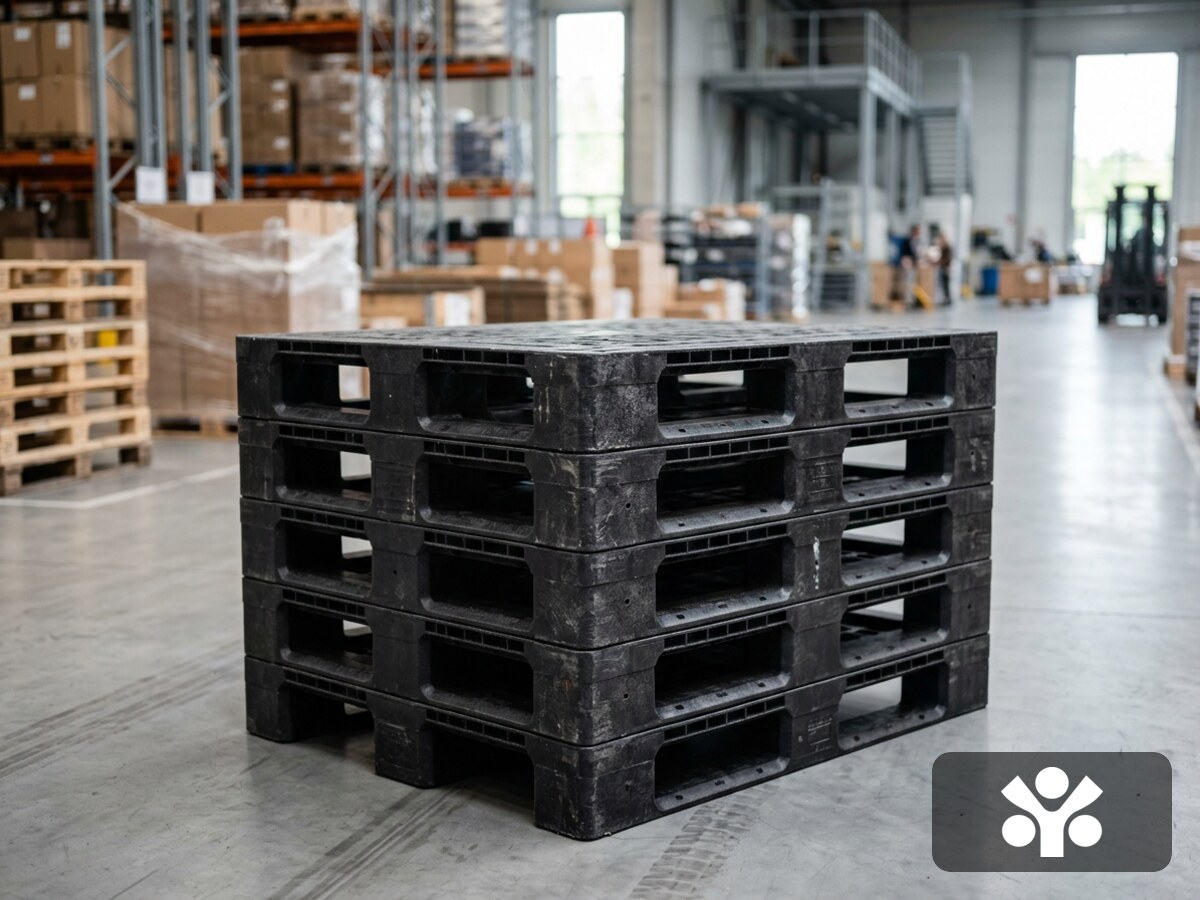
Plastic pallets have quietly won the logistics race. They outlast wood, take washing without rotting, and carry consistent loads through automated handling. The question for manufacturers in 2026 is no longer whether to use plastic — it is *which* plastic.
The case for recycled PolyAl
PolyAl pellets are made from polyethylene recovered from beverage cartons, with a natural aluminium load that adds rigidity. For a pallet, that means dimensional stability close to virgin HDPE, with a fraction of the embodied carbon.
Three reasons buyers are switching:
- Carbon cost. Each tonne of virgin HDPE carries roughly 1.8 t of CO₂ eq. Recycled pellets cut that by more than 70%, before factoring in the avoided landfill emissions.
- Stable supply. Polylaminated waste streams are abundant across Europe — 720,000 tonnes annually that currently go nowhere. That insulates buyers from the price swings of fossil polymer markets.
- Regulatory tailwinds. PPWR and national reuse mandates increasingly reward recycled content in industrial packaging. Pallets made with PolyAl simply score better on the metrics regulators care about.
What about performance?
The honest answer: PolyAl is not a drop-in replacement for every spec. Tensile strength sits in the 10–15 MPa range — fine for the vast majority of pallet designs, less suitable for ultra-high-stack racking. Where it shines is in its Vicat temperature (90–100 °C), chemical resistance and the way the aluminium filler holds the geometry through repeated wash cycles.
Bottom line
If you make pallets and have not yet trialled a 13% aluminium-loaded recycled PE, you are leaving margin and ESG points on the table. Talk to us about a sample batch.