
Rotational moulding with PolyAl: tanks, planters and large hollow parts
What works, what doesn't, and the powder-grade vs micropellet trade-off when rotomoulding recycled PolyAl.
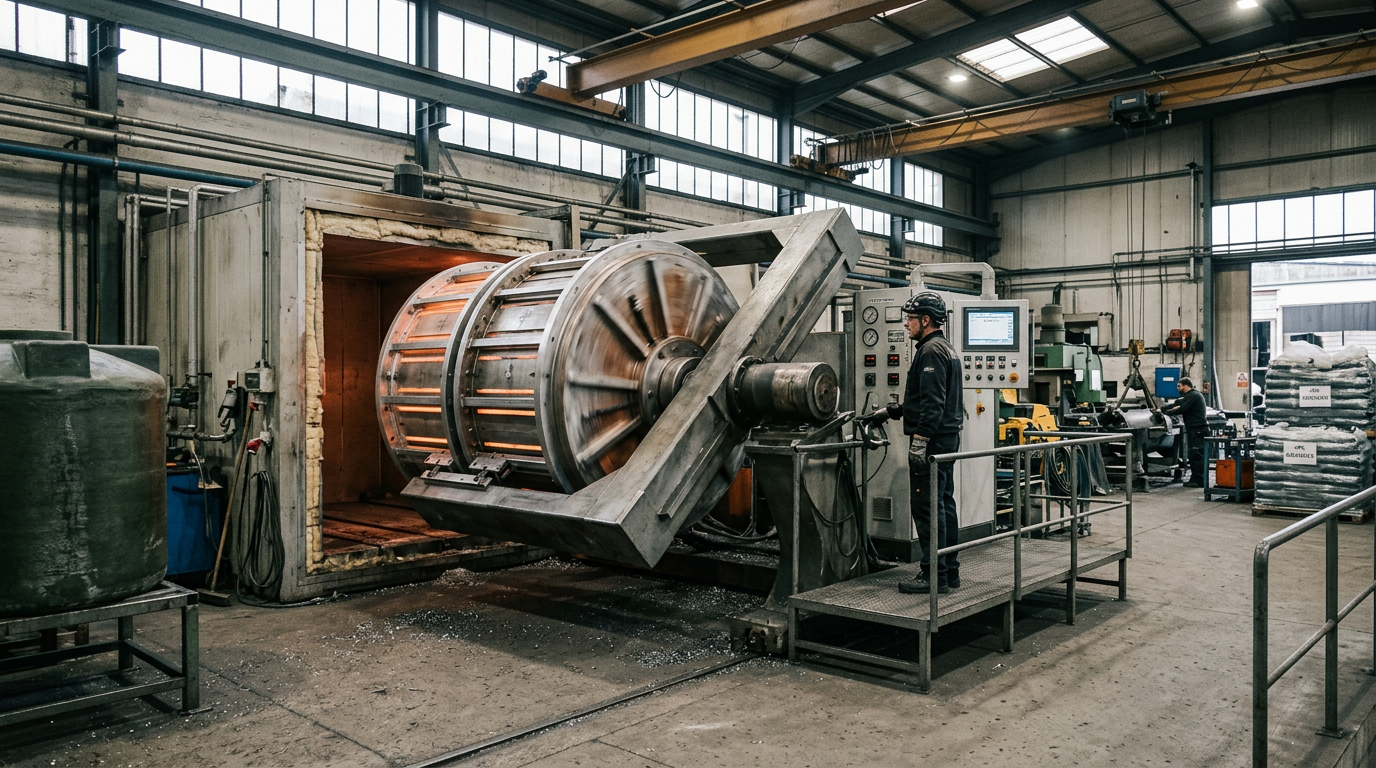
Rotomoulding is a slower, lower-pressure process well suited to large hollow parts: water tanks, planters, road barriers, kayaks. PolyAl can be rotomoulded with a few precautions.
Powder vs micropellet
The industry standard is HDPE powder (mesh 35). PolyAl pellets must be either ground to powder or supplied as micropellets (1.5–2 mm) for rotomoulding. Grinding is straightforward at room temperature; the aluminium does not impair grindability significantly.
Recommended formulation
For non-pressure tanks and planters: 70 % PolyAl + 30 % rotomoulding-grade virgin HDPE (cap layer or skin). Pure PolyAl is feasible but the surface finish on the inside of the part is rougher.
Cycle
- Oven temperature: 280–300 °C (5–10 °C below virgin HDPE)
- Internal air temperature target (Rotolog probe): 200 °C
- Cycle time: comparable to HDPE, +5–10 % for skin uniformity
Wall thickness and uniformity
The aluminium acts as a heat ballast: thicker areas heat more uniformly, but thin sections (< 4 mm) can show flow-line marks. Design for 5 mm minimum wall.
Applications already in production
- Outdoor planters (200–800 L)
- Stormwater attenuation modules
- Roadside ballast barriers (water-fillable)
- Composting bins
- Marine fender modules
What to avoid
- Pressure tanks (no certification yet)
- Food-grade tanks (UE 2022/1616)
- Very thin-wall ornamental parts (< 3 mm)
Rotomoulded PolyAl gives a distinctive speckled charcoal finish that is increasingly prized for street furniture and visible infrastructure.